Case Study

Case Study

Team HUB

Team HUB

Internal Resource & Live-Chat Knowledge Platform

Internal Resource & Live-Chat Knowledge Platform

Role: UX / UI Product Designer

Role: UX / UI Product Designer

Role: UX / UI Product Designer

Project: Internal Enterprise Platform

Project: Internal Enterprise Platform

Project: Internal Enterprise Platform

Timeline: Multi-year, Iterative (5 years)

Timeline: Multi-year, Iterative (5 years)

Timeline: Multi-year, Iterative (5 years)

An internal resource and live-chat knowledge platform. Developed and maintained over several years to support hospital care advocates during real-time patient conversations.

An internal resource and live-chat knowledge platform. Developed and maintained over several years to support hospital care advocates during real-time patient conversations.

An internal resource and live-chat knowledge platform. Developed and maintained over several years to support hospital care advocates during real-time patient conversations.

Unlike a traditional design project, this system was built while actively handling live chats, allowing insights to be gathered directly from patient questions, agent workflows, and evolving healthcare services.

Unlike a traditional design project, this system was built while actively handling live chats, allowing insights to be gathered directly from patient questions, agent workflows, and evolving healthcare services.

Unlike a traditional design project, this system was built while actively handling live chats, allowing insights to be gathered directly from patient questions, agent workflows, and evolving healthcare services.

All visuals and content shown have been generalized to protect internal systems and data.

All visuals and content shown have been generalized to protect internal systems and data.

All visuals and content shown have been generalized to protect internal systems and data.

the challenge

the challenge

Information was everywhere. Except where agents needed it.

Information was everywhere. Except where agents needed it.

Information was everywhere. Except where agents needed it.

Agents were expected to support patients across a growing ecosystem of tools, web portals, mobile apps, and medical services, while maintaining accuracy, empathy, and speed in live conversations.

At the same time, information was:

  • Scattered across outdated spreadsheets, PDFs, and websites

  • Inconsistent between agents

  • Difficult to access during active chats

This resulted in:

  • Longer response times

  • Higher cognitive load for agents

  • Inconsistent patient experiences

  • Extended onboarding time for new hires

Agents needed a single, reliable source of truth that could be used during live conversations without slowing them down.
the solution

the solution

A living system, not a static tool.

A living system, not a static tool.

A living system, not a static tool.

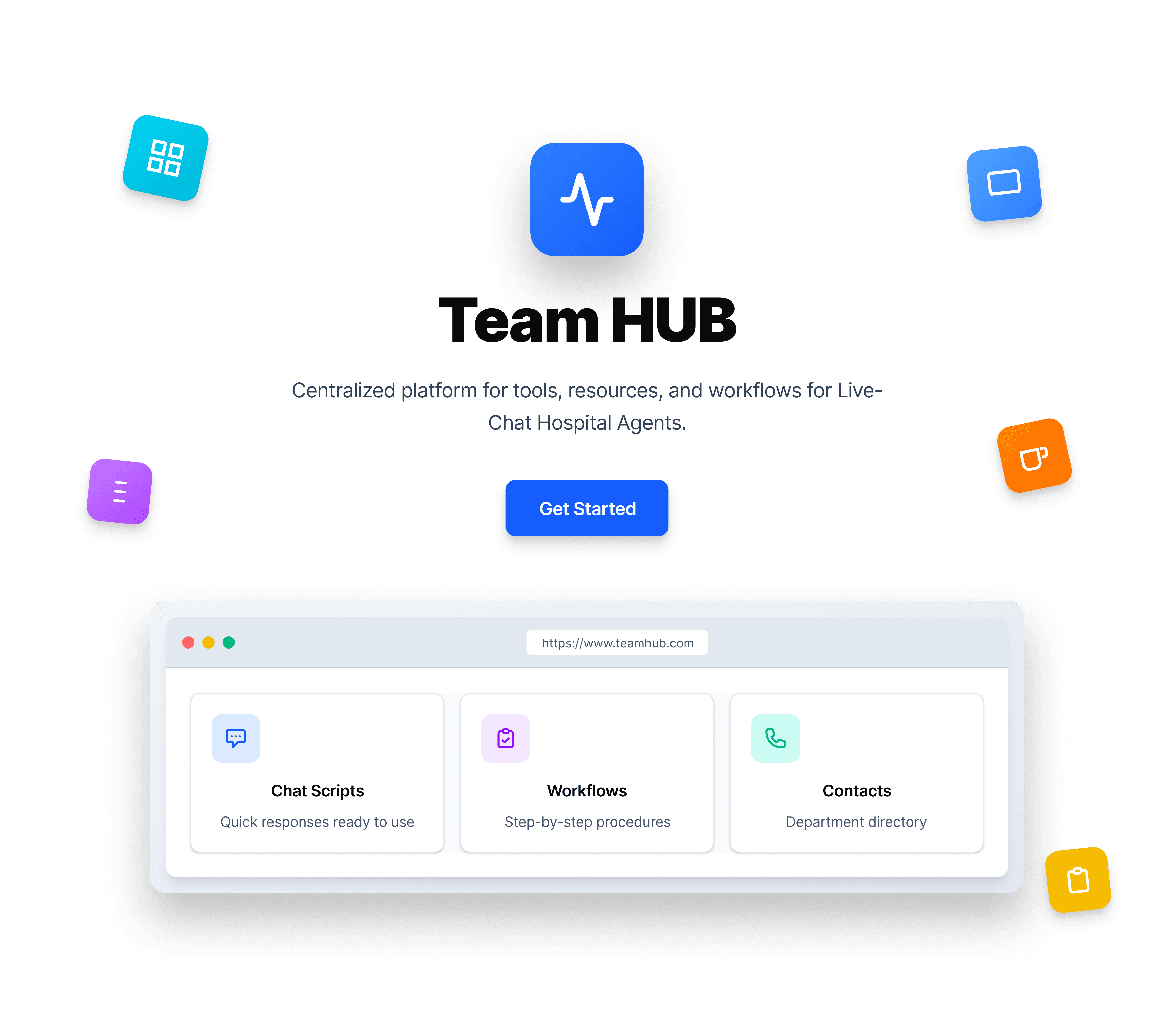
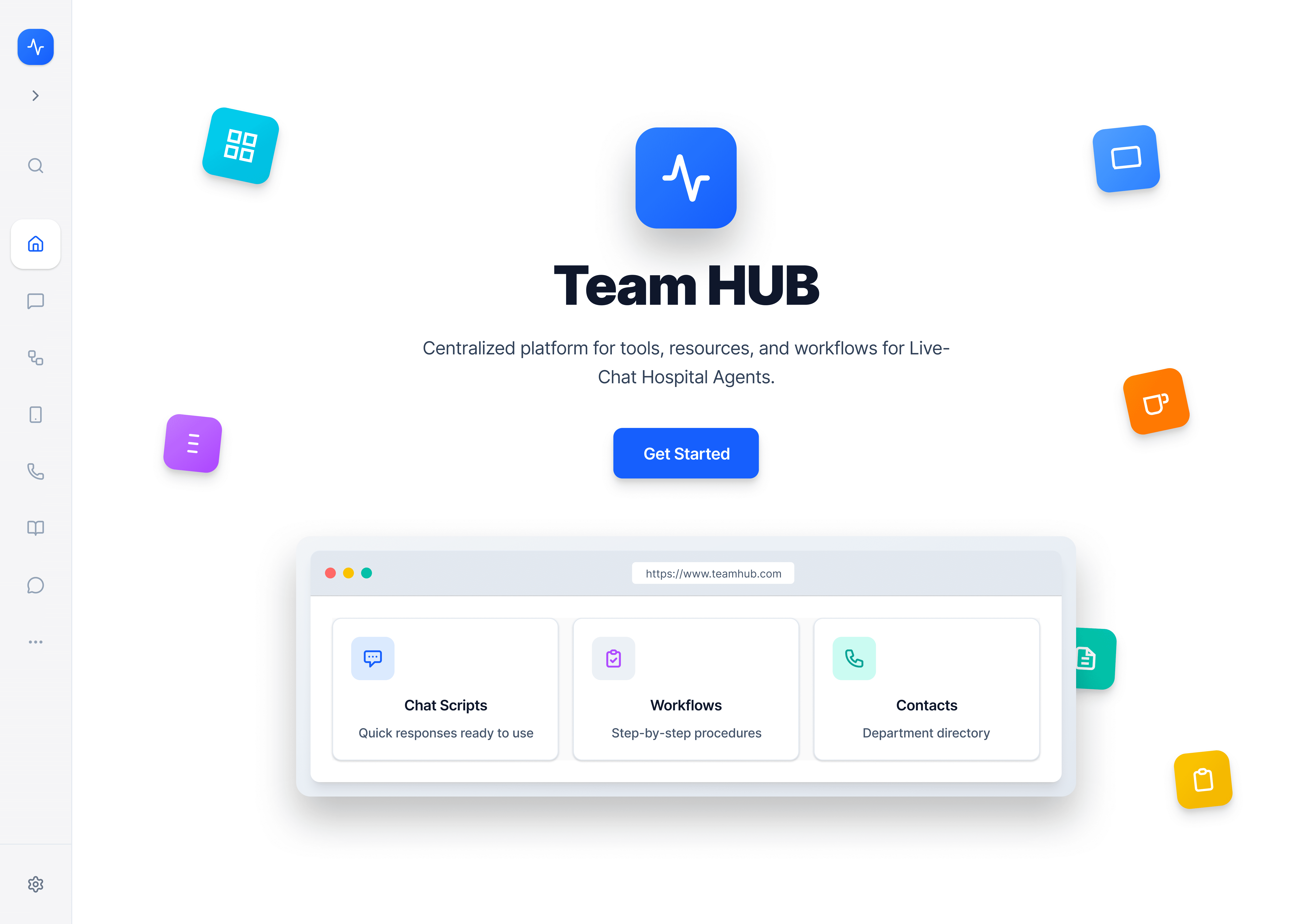
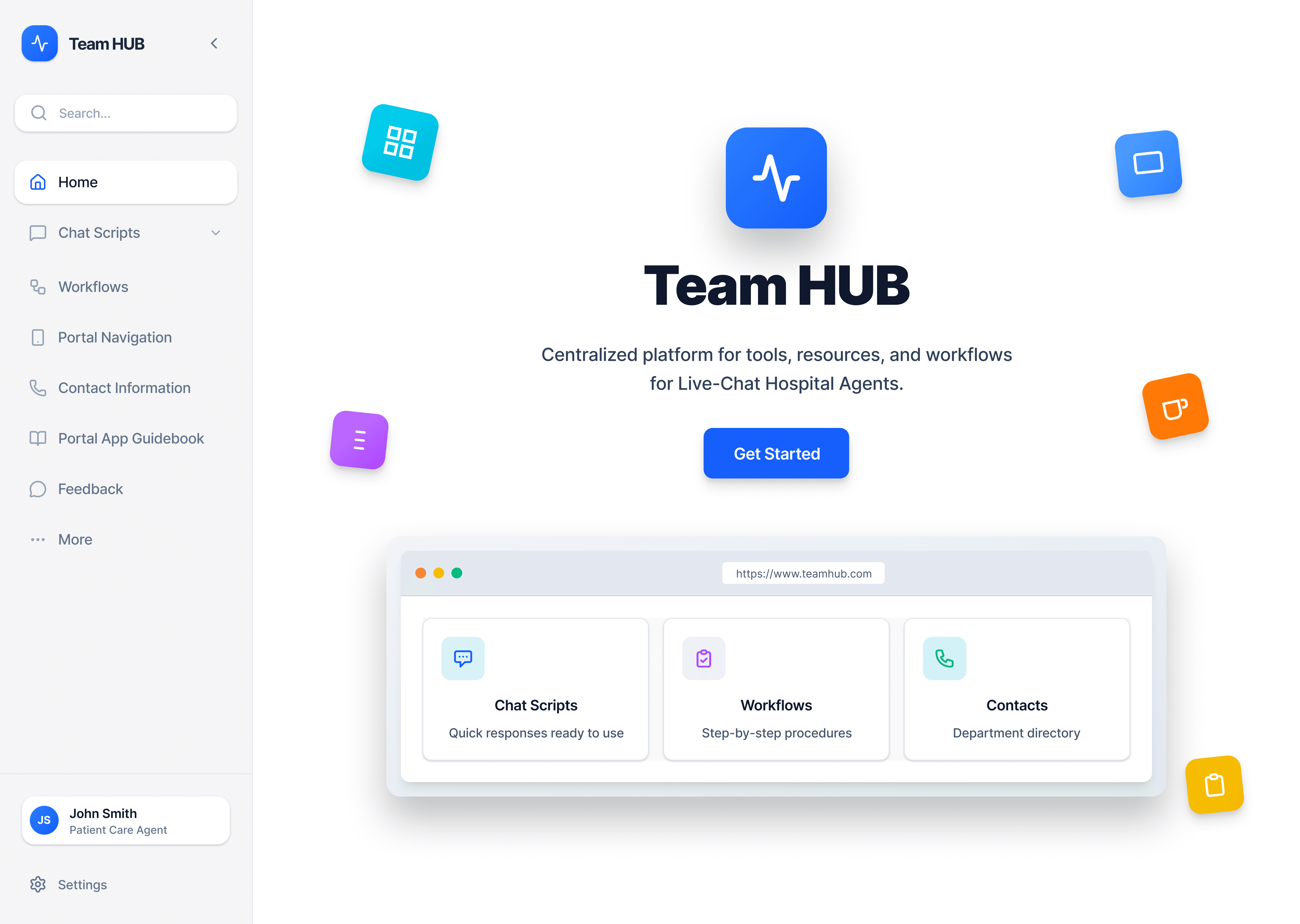
The Team HUB emerged as a centralized internal system that combined chat scripts, workflows, contact information, and navigation support into a single source of truth, designed to be used while actively chatting with patients.
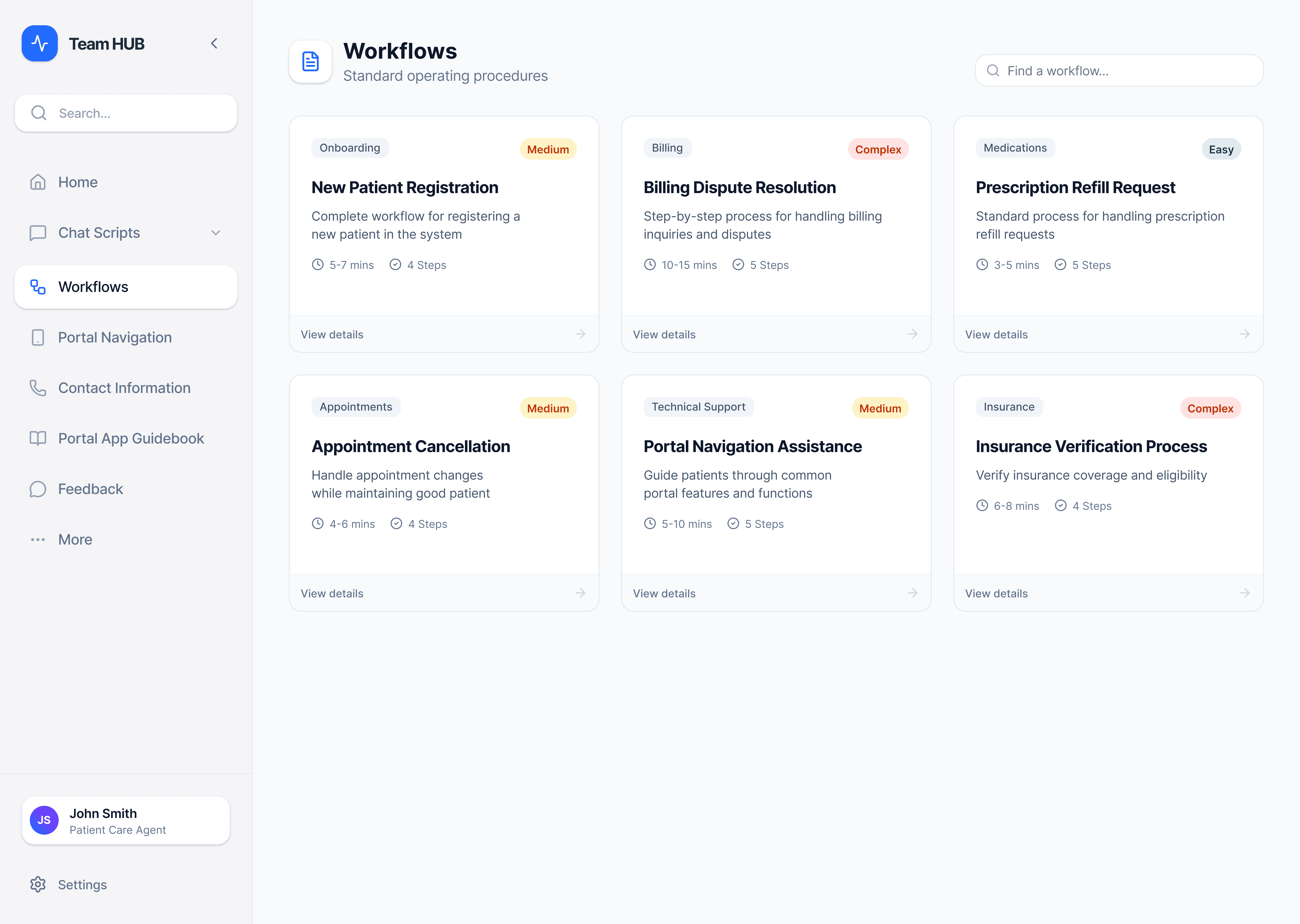
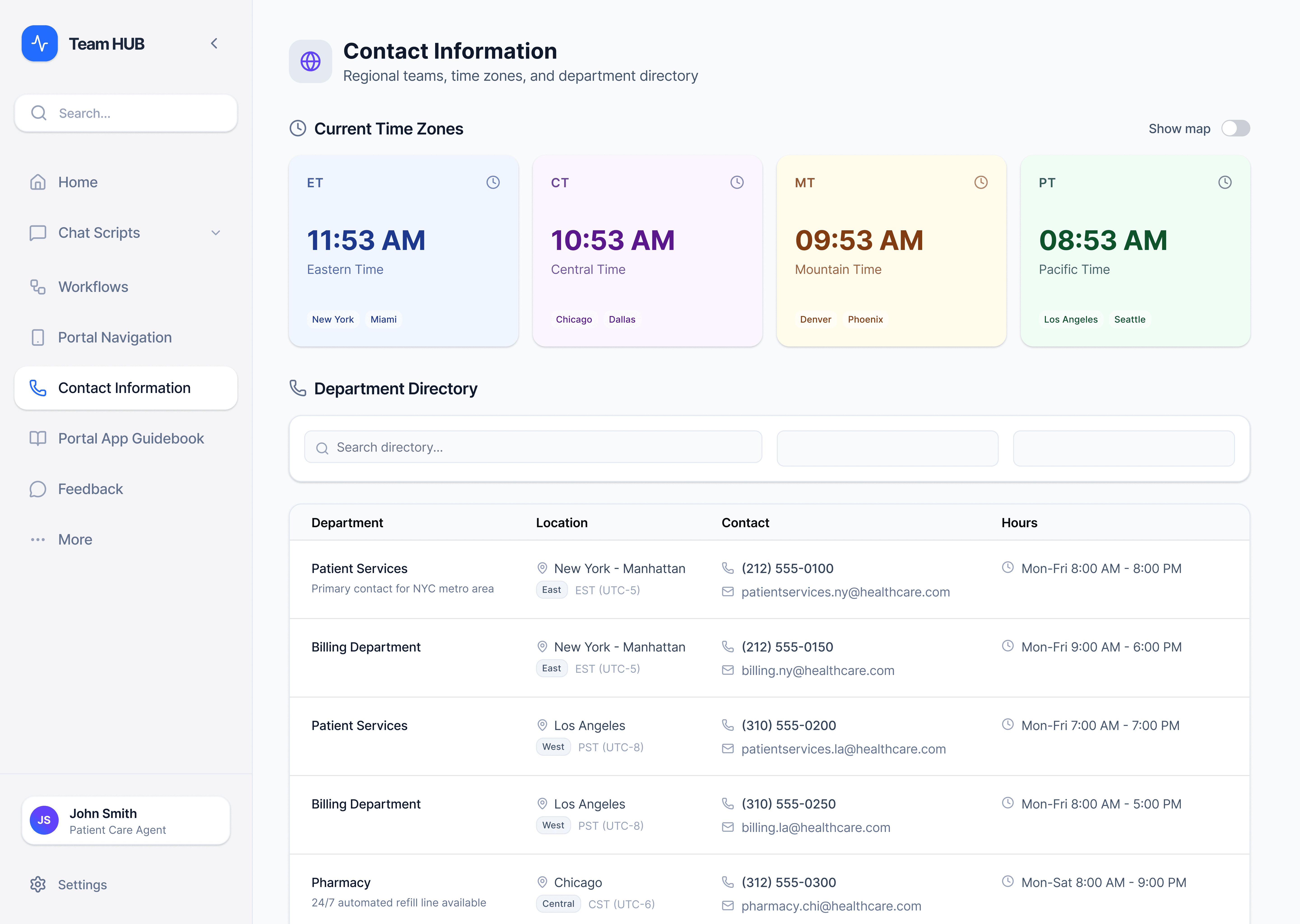
Rather than being designed for a single launch, the platform was treated as a living system, continuously updated as:

  • Patient questions evolved

  • The portal UI changed

  • New services were introduced

  • Internal processes shifted

Rather than being designed for a single launch, the platform was treated as a living system, continuously updated as:

  • Patient questions evolved

  • The portal UI changed

  • New services were introduced

  • Internal processes shifted

The result was a tool that supported both day-to-day efficiency and long-term scalability.

The result was a tool that supported both day-to-day efficiency and long-term scalability.

Research & Continuous Discovery

Insights gathered from the front line.

Insights gathered from the front line.

Insights gathered from the front line.

Research for Team HUB was conducted through direct, ongoing exposure to patient conversations and agent workflows.

Research for Team HUB was conducted through direct, ongoing exposure to patient conversations and agent workflows.

While supporting patients via live chat, recurring questions, points of confusion, and friction patterns were documented and organized into an evolving knowledge system. Over time, these patterns informed how scripts were written, categorized, and prioritized:

While supporting patients via live chat, recurring questions, points of confusion, and friction patterns were documented and organized into an evolving knowledge system. Over time, these patterns informed how scripts were written, categorized, and prioritized:

01

High-frequency patient questions identified through daily chats

02

Gaps in existing documentation uncovered in real time

03

Outdated internal spreadsheets and resources audited and consolidated

04

Portal and app changes continuously reflected in script updates

These sources were audited, consolidated, and continuously updated based on real usage. This approach allowed insights to emerge organically over time, grounded in real-world needs rather than assumptions.
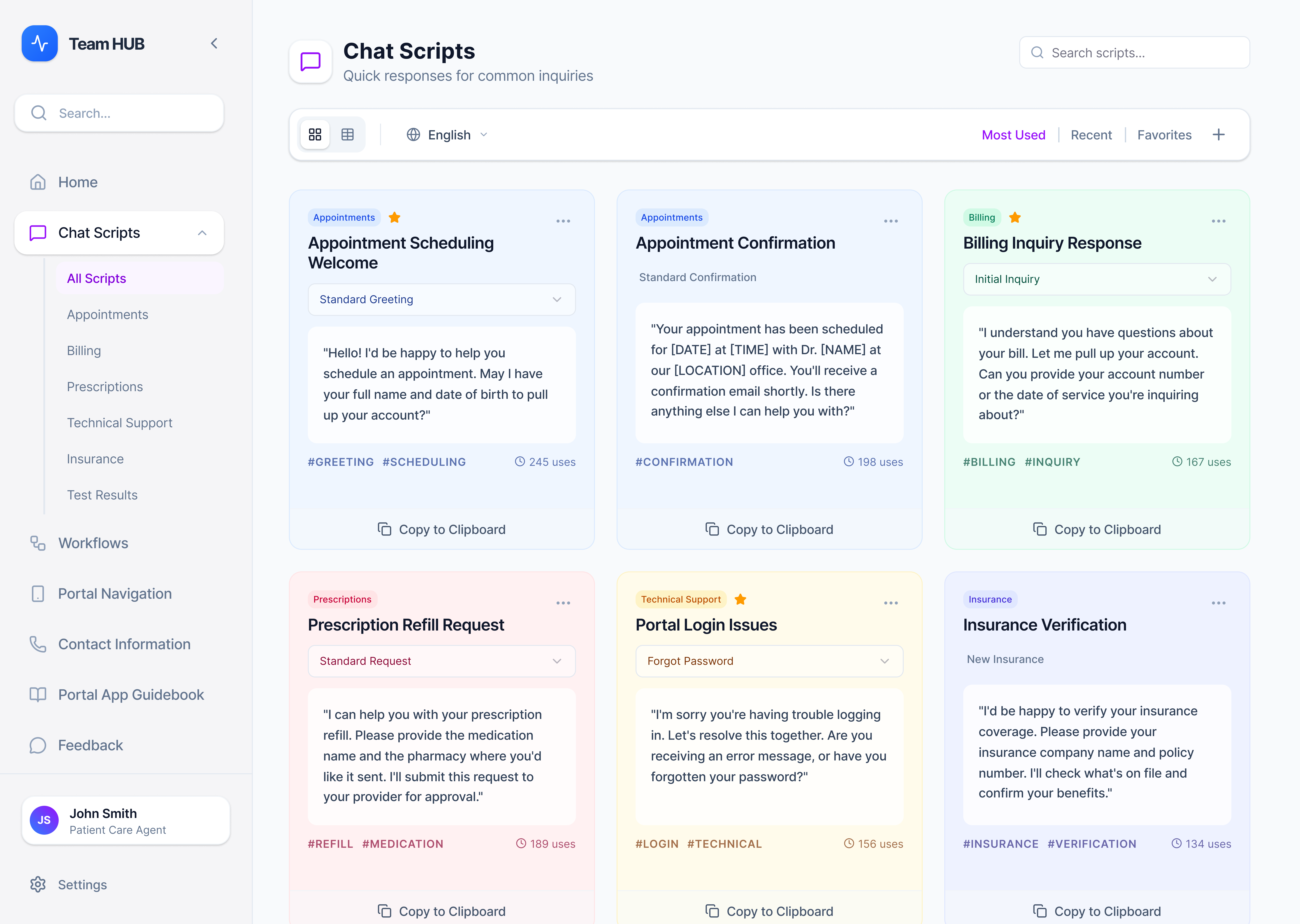
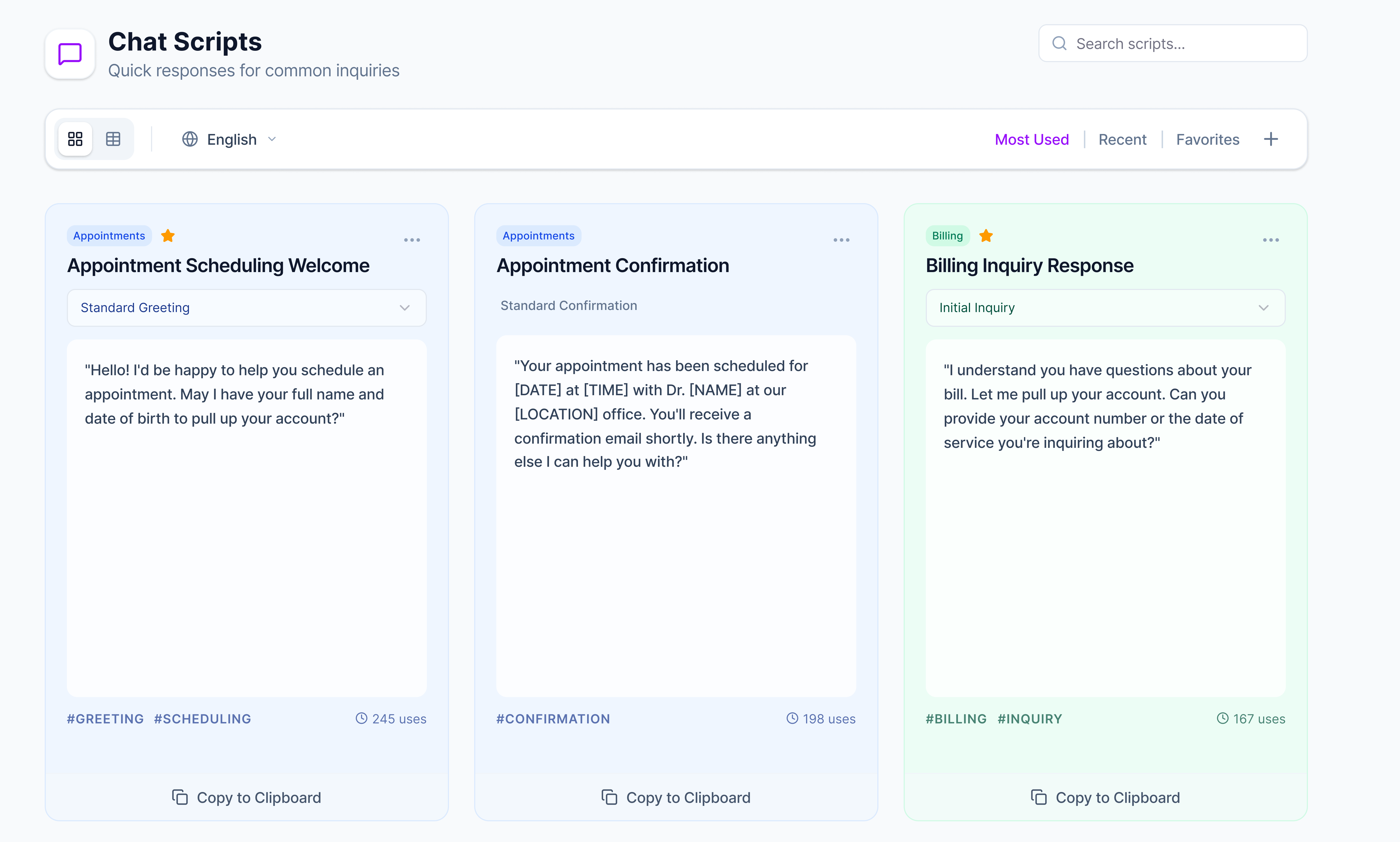
Design Process / System Evolution

Evolved through continuous iteration.

Evolved through continuous iteration.

Rather than following a linear design process, Team HUB evolved through continuous iteration. As patient needs, internal tools, and medical services changed, the system was regularly updated to ensure accuracy and usability.

Continuous iteration driven by:

  • Daily exposure to patient questions

  • Agent feedback

  • Policy and platform updates

Design decisions validated by:

  • Categories were reorganized based on usage frequency

  • Workflows were refined as edge cases emerged

This approach ensured the system stayed accurate, relevant, and usable, even as underlying products and services changed.

Design Process / System Evolution

Evolved through continuous iteration.

Rather than following a linear design process, Team HUB evolved through continuous iteration. As patient needs, internal tools, and medical services changed, the system was regularly updated to ensure accuracy and usability.

Continuous iteration driven by:

  • Daily exposure to patient questions

  • Agent feedback

  • Policy and platform updates

Design decisions validated by:

  • Categories were reorganized based on usage frequency

  • Workflows were refined as edge cases emerged

This approach ensured the system stayed accurate, relevant, and usable, even as underlying products and services changed.

Key Features & Solutions

Key Features & Solutions

Built for the real workflow.

Built for the real workflow.

Built for the real workflow.

Research for Team HUB was conducted through direct, ongoing exposure to patient conversations and agent workflows.

Research for Team HUB was conducted through direct, ongoing exposure to patient conversations and agent workflows.

Chat Scripts

The core of Team HUB is a living script database designed for real-time use.

Highlights

Scripts categorized by topic and scenario

"Most used" responses surfaced naturally through usage

Copy-to-clipboard interaction optimized for speed

Content updated continuously as portal flows and services changed

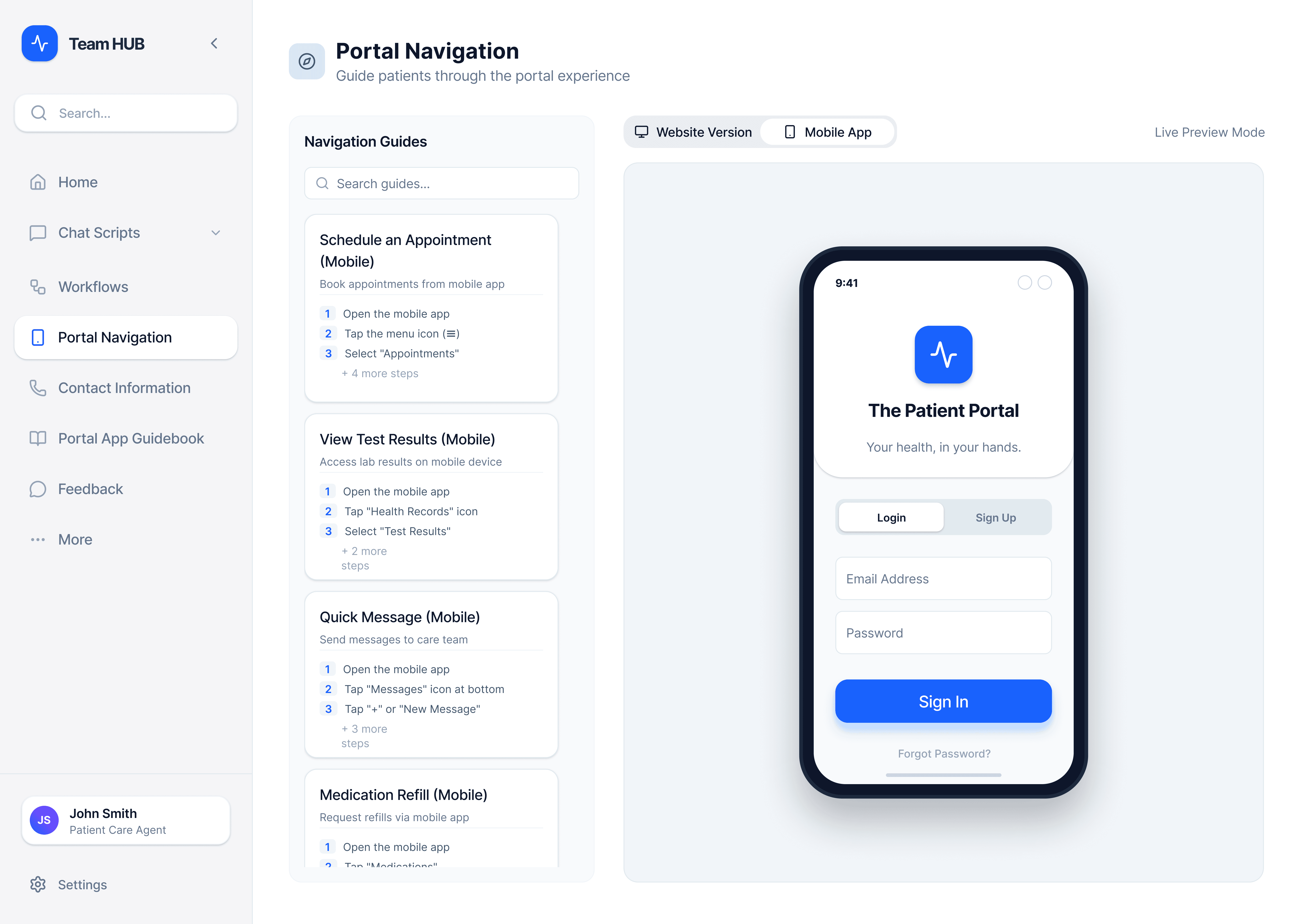
Portal & App Navigation Support

Designed to help agents follow the patient journey in real time.

Highlights

Allows agents to mirror what patients see

Helps identify friction points as they happen

Improves clarity when guiding patients step by step

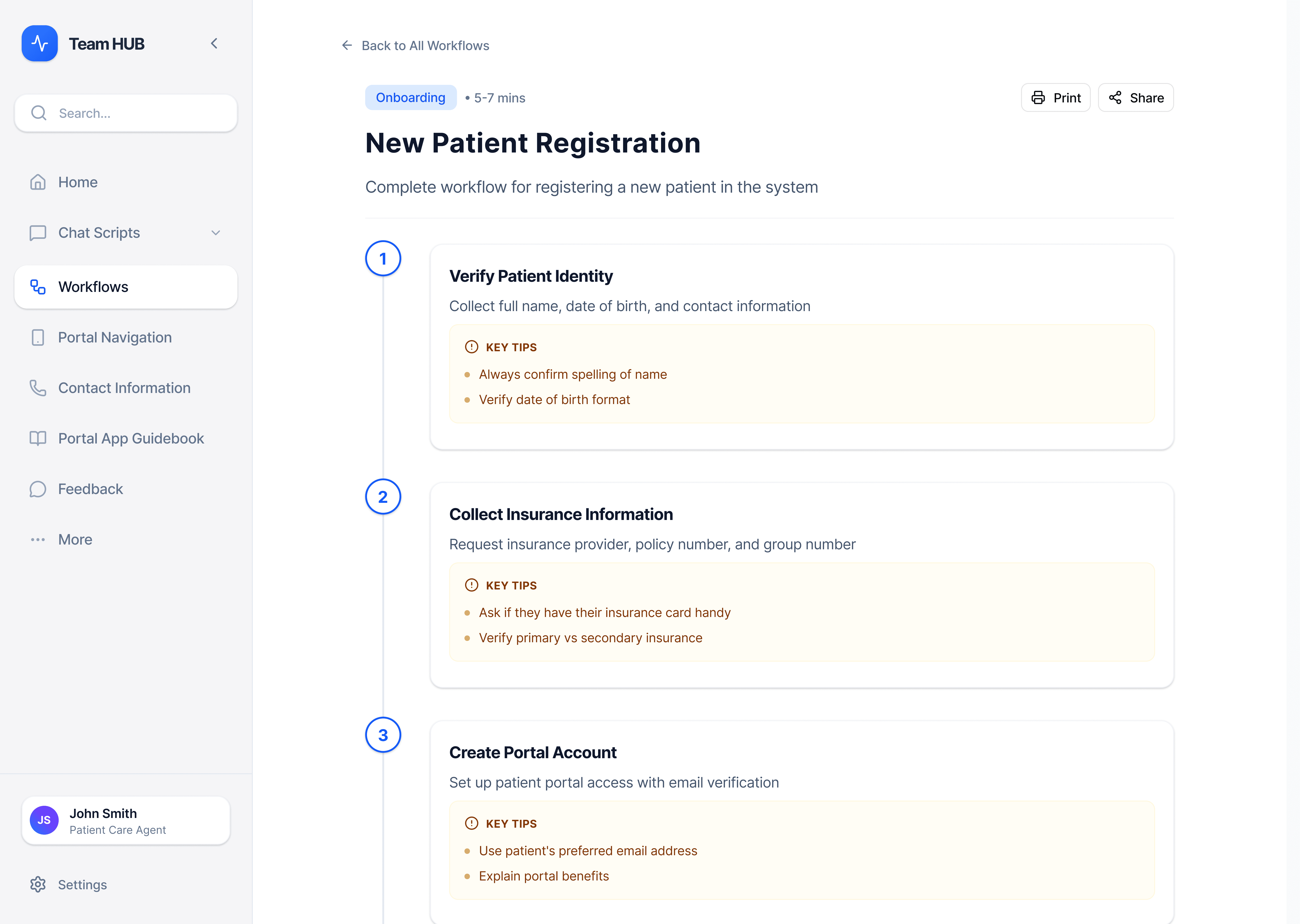
Workflows

Standardized step-by-step guidance for common and complex scenarios.

Highlights

Best practices for escalations, transfers, and follow-ups

Clear structure to support both experienced and new agents

Used as both a reference and a training resource

Contact Information System

A structured internal directory that replaced outdated spreadsheets.

Highlights

Region-based organization

Time-zone awareness

Scannable tables for fast lookup

Reduced errors and unnecessary escalations
Results & Impact

Measurable improvements across the board.

As Team HUB matured, it delivered measurable improvements across efficiency, quality, and satisfaction.

Operational Improvements

  • Faster response times during live chats

  • Reduced context switching between tools

  • More consistent explanations across agents

User Satisfaction

  • Higher agent satisfaction due to reduced cognitive load

  • Improved patient experience through clearer, more consistent support

Quality & Training

  • Improved response consistency

  • Faster onboarding for new hires

  • Increased agent confidence during complex interactions

Results & Impact

Measurable improvements across the board.

As Team HUB matured, it delivered measurable improvements across efficiency, quality, and satisfaction.

Operational Improvements

  • Faster response times during live chats

  • Reduced context switching between tools

  • More consistent explanations across agents

User Satisfaction

  • Higher agent satisfaction due to reduced cognitive load

  • Improved patient experience through clearer, more consistent support

Quality & Training

  • Improved response consistency

  • Faster onboarding for new hires

  • Increased agent confidence during complex interactions

prototype

prototype

Principles in practice.

Principles in practice.

The Team HUB prototype embodies essential principles: it applies the same UX standards to internal tools as to customer-facing products, treats content systems as products, and emphasizes that valuable insights arise from real challenges.

The Team HUB prototype embodies essential principles: it applies the same UX standards to internal tools as to customer-facing products, treats content systems as products, and emphasizes that valuable insights arise from real challenges.

This version is a simplified case study representation, with visuals and content generalized to protect the organization's internal systems and data.

This version is a simplified case study representation, with visuals and content generalized to protect the organization's internal systems and data.

reflection & lessons learned

What this project taught me.

What this project taught me.

Key Principles

Designing Team HUB reinforced several key principles:

  • Internal tools deserve the same UX rigor as customer-facing products

  • Content systems are products, not documentation

  • The most valuable insights come from sustained exposure to real problems

  • Designing for change is essential in healthcare environments

  • Systems thinking is essential when designing for scale

Key Principles

Designing Team HUB reinforced several key principles:

  • Internal tools deserve the same UX rigor as customer-facing products

  • Content systems are products, not documentation

  • The most valuable insights come from sustained exposure to real problems

  • Designing for change is essential in healthcare environments

  • Systems thinking is essential when designing for scale

Key Principles

Designing Team HUB reinforced several key principles:

  • Internal tools deserve the same UX rigor as customer-facing products

  • Content systems are products, not documentation

  • The most valuable insights come from sustained exposure to real problems

  • Designing for change is essential in healthcare environments

  • Systems thinking is essential when designing for scale

Personal Takeaway

Personal Takeaway

Personal Takeaway

Thank you for reading

Let's work together.

Let's work together.