Jan 6, 2026
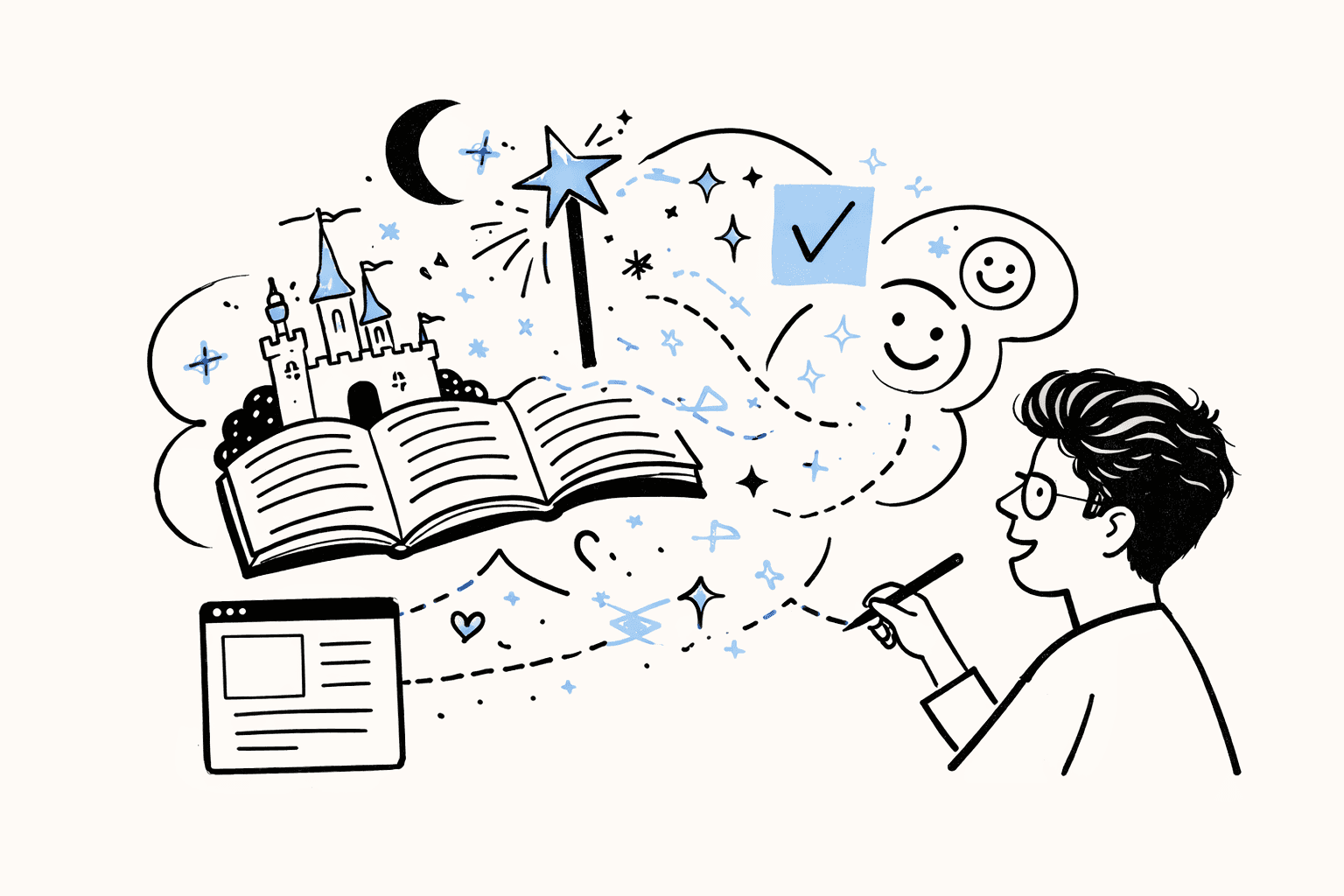
Design Is Storytelling Just With Different Tools
Long before I worked in UX, I was drawn to storytelling.
Years ago, that pull led me to work at The Walt Disney Company. What fascinated me wasn’t just the magic on the surface, but the intention underneath it, how every detail existed to guide emotion, create clarity, and leave people feeling something meaningful.
At the time, I didn’t realize how closely that mindset would align with my future in product design.
Stories Create Meaning, Design Creates the Path
At its heart, storytelling is about guiding someone through an experience. There’s a beginning, a sense of momentum, moments of tension, and a resolution. Good stories don’t confuse the audience, they invite them in.
That’s exactly how I think about design.
Every product tells a story:
A user arrives with a goal
They encounter decisions, friction, or reassurance
They leave either confident — or frustrated
My role as a designer is to shape that narrative intentionally.
Classic Storytelling, Modern Tools
One of my favorite books, The Ride of a Lifetime by Robert Iger, reinforced this belief. What resonated with me most was the balance, a deep respect for timeless storytelling principles paired with a willingness to embrace innovation and technology.
That balance mirrors how I approach design.
I value clean, modern, technologically forward solutions, but never at the expense of purpose or humanity. Tools evolve, interfaces change. But the need for clarity, emotional resonance, and trust stays the same.
Designing Experiences, Not Just Interfaces
When I design, I don’t think in isolated screens. I think in journeys.
I ask:
What does the user feel when they first arrive?
Where might they hesitate or lose confidence?
What should the final moment communicate?
Storytelling helps me design experiences that feel cohesive instead of fragmented, intentional instead of accidental.
Why This Perspective Matters
Design isn’t just about usability. It’s about meaning.
When empathy guides who we design for, storytelling guides how we shape the experience. Together, they create products that don’t just function, they connect.
That’s the kind of work I’m drawn to.
And it’s the kind of designer I continue to become.